EURAS: Reflecting on Progress and Looking Ahead to the Next Milestones
What began just over two years ago as a bold initiative led by parents of children living with RASopathies has grown into a vibrant, international network of scientists, clinicians, patient organisations, and families. Today, more than 1,200 families are connected through national patient groups, and 14 partners across 8 countries work side by side to transform the future of RASopathy and SYNGAP1 research. Together we are building a patient-driven registry, developing innovative disease models, exploring new therapies and brain-targeted delivery technologies, and strengthening the bridge between lived experience and scientific discovery.
A Year of Momentum and Milestones
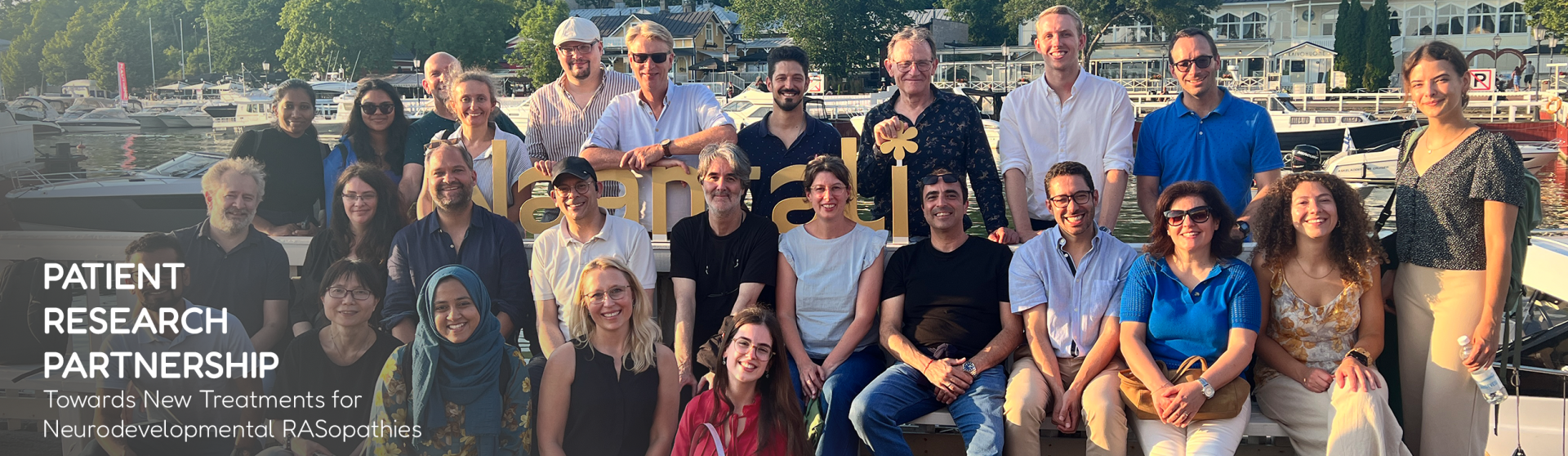
As 2025 draws to a close, EURAS celebrates a year marked by collaboration, scientific progress, anda growing sense of community. The highlight of the year was the EURAS Progress Meeting in Turku, Finland, hosted by the University of Turku. More than 30 representatives from across the consortium came together to share findings and shape the next phase of the project.
The meeting brought to life what makes EURAS unique:
- Families’ contributions to the PATRAS Patient Registry are already enabling researchers to map symptoms and disease progression more clearly.
- Foundational work began on stem-cell–based disease models, which will allow personalised therapeutic strategies in the future.
- Teams made exciting advances in innovative drug and antisense oligonucleotide delivery methods, pushing the boundaries of how treatments could one day reach the brain more effectively.
Every step reflects deep collaboration not only between scientific disciplines, but between researchers and the families whose experiences drive EURAS forward.
This year also marked significant scientific visibility. In 2025 alone, three consortium publications were accepted in international journals, highlighting how the shared expertise within EURAS is accelerating research in RASopathies and related fields.
Alongside the scientific progress, our EURAS Patient Board continued to grow, welcoming new members and institutions who strengthen the heart of the project: ensuring that families remain co-creators in research, not just contributors.
Looking Ahead: A Year of Connection and Discovery
As we move into 2026, EURAS steps confidently into a new phase of growth. A major highlight of the coming year will be the EURAS Symposium at the 2026 FENS Forum, chaired by Project Coordinator Prof. Anna Fejtová from Uniklinikum Erlangen.
The symposium will bring together leading experts to explore how synaptic dysfunction from miswired neural circuits to disrupted cellular signalling contributes to the cognitive and behavioural challenges seen in neurodevelopmental disorders and how these defects can be possibly treated.
This event reflects the core vision of EURAS: connecting molecular insights with clinical relevance through strong European and global partnerships.
Entering the Second Half of the Project
With 2026 we reach the halfway mark of this four-year journey and excitement and ambition remain high. In the coming months, EURAS will deepen its work to:
- Advance understanding of disease mechanisms,
- Develop new therapeutic strategies,
- Explore non-invasive technologies to deliver treatments directly to the brain,
- And continue empowering and connecting families across Europe and beyond.
EURAS was built on the belief that when families, clinicians, and researchers work together, meaningful progress becomes possible. As we move into 2026, we look forward to continuing this mission with curiosity, with determination, and with the shared hope for better treatments and better futures.